
Copyright © 2026 Hunan Qiqin Environmental Protection Technology Co., Ltd
SEARCH WHAT YOU WANT
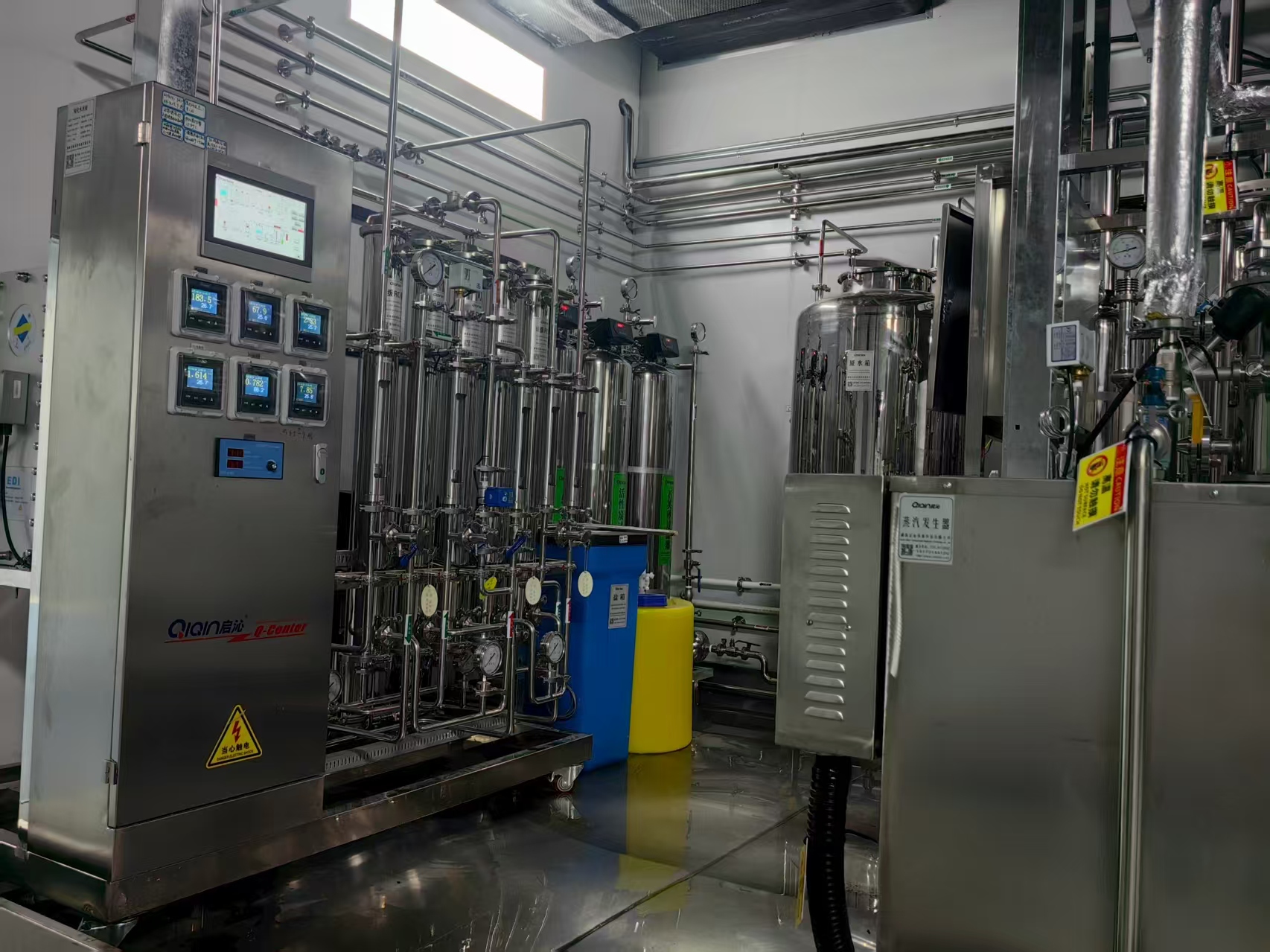
The original laboratory water mainly relied on decentralized desktop pure water machines, facing the following challenges: insufficient water quality stability: uneven maintenance levels of decentralized equipment, water quality fluctuations leading to abnormal experimental phenomena and data deviations, affecting teaching effectiveness and research progress. Qiqin adopts an architecture of "central preparation+partitioned circulation+on-demand water intake" to replace the decentralized desktop machines mode.
The original laboratory water mainly relied on decentralized desktop pure water machines, facing the following challenges: insufficient water quality stability: uneven maintenance levels of decentralized equipment, water quality fluctuations leading to abnormal experimental phenomena and data deviations, affecting teaching effectiveness and research progress. Qiqin adopts an architecture of "central preparation+partitioned circulation+on-demand water intake" to replace the decentralized desktop machines mode.
Central South University is a key national university directly under the Ministry of Education, and its disciplines such as chemistry, materials science, and clinical medicine have entered the top 1% of global ESI rankings. The school has a large number of teaching laboratories and research platforms. The original laboratory water mainly relied on decentralized desktop pure water machines, facing the following challenges:
● Insufficient water quality stability: The maintenance level of dispersed equipment varies, and water quality fluctuations lead to abnormal experimental phenomena and data deviations, affecting teaching effectiveness and research progress.
● Difficulty in management: Dozens of scattered equipment are distributed in different laboratories, with a large workload for maintenance, calibration, and consumables replacement, and there is a risk of equipment damage caused by human factors.
● Peak water pressure: During the concentrated period of the experimental class, multiple devices simultaneously took water, resulting in insufficient water pressure and decreased water quality at some water intake points.
● Difficulty in cost control: high prices for dispersed procurement of consumables, frequent equipment maintenance, and difficulty in achieving unified cost accounting and resource optimization.
Central South University is a key national university directly under the Ministry of Education, and its disciplines such as chemistry, materials science, and clinical medicine have entered the top 1% of global ESI rankings. The school has a large number of teaching laboratories and research platforms. The original laboratory water mainly relied on decentralized desktop pure water machines, facing the following challenges:
● Insufficient water quality stability: The maintenance level of dispersed equipment varies, and water quality fluctuations lead to abnormal experimental phenomena and data deviations, affecting teaching effectiveness and research progress.
● Difficulty in management: Dozens of scattered equipment are distributed in different laboratories, with a large workload for maintenance, calibration, and consumables replacement, and there is a risk of equipment damage caused by human factors.
● Peak water pressure: During the concentrated period of the experimental class, multiple devices simultaneously took water, resulting in insufficient water pressure and decreased water quality at some water intake points.
● Difficulty in cost control: high prices for dispersed procurement of consumables, frequent equipment maintenance, and difficulty in achieving unified cost accounting and resource optimization.

Copyright © 2026 Hunan Qiqin Environmental Protection Technology Co., Ltd